
Legacy of Nursing
Nursing History: North Valley Hospital and Extended Care
Compiled January 2026 by Karen Schimpf RN
This is a compiled history of nursing in Tonasket and at North Valley Hospital (NVH) and Extended Care. I began my career at NVH in 1974, and at the time, I was unfamiliar with the history of the town, the hospital, or the nurses I worked alongside. Over the years, I was privileged to know many of the early nurses, work with them, and eventually care for some of them in the Nursing Home before they passed. I retired in 2011, and this record is organized by facility to help track the legacy of those who served our community.
Early Healthcare and the Pioneer Era
For many years, country doctors made home visits, nursing as well as treating the sick and injured. Sometimes they had offices or small hospitals in small towns, often staffed by their wives who also acted as nurses. One example was Dr. Stuart Holmes and his wife, Edith, who helped her husband run the office and clinic. Some women were midwives who made house calls and delivered babies under difficult conditions. Supplies included linen, carbolic acid, sweet oil, and cornstarch. Linen was sterilized by putting it on a shovel and heating it over a fire; scorched linen was considered more healing for a baby's navel. While what nurses do has changed significantly, they continue to provide needed care, master the latest skills, and utilize important management skills.
Auntie Put and the Putnam House
In 1913, Frank Putnam moved his printing business from Conconully to Tonasket and started the newspaper The Tonasket Times. He and his wife, Fanny, built their home—the Putnam House—on the hill in Tonasket. This house later became the home of Neil Helberg. Fanny Putnam, known as Auntie Put, delivered many babies, made house calls, and did practical nursing. She passed in 1971. A former owner mentioned she nursed patients in her home and that the house was used as an unofficial hospital; it even featured a dumb waiter.
The First Hospital in Tonasket
The Schweikert House, built in 1914, became the first hospital or maternity home in Tonasket. It was opened by Mervyn Hayden, a nurse, and Edna McComb, a midwife. Other area midwives included Mrs. W.J. Bandtman and Mrs. McCabe from the Siwash area. Nellie Brattain was a nurse there, and Dr. Bevis moved in by 1924, overseeing 12 beds.
Mrs. Melvin Laurie was asked to take charge of nursing and helped with surgery as an anesthetist. During the Depression, from 1930 to 1932, nurses took over the finances of the hospital. In 1931, Dr. Bevis hired Ruth Stalder and Leta Barker, who eventually leased the hospital until it closed when they married. It reopened in 1935 with Margaret Casey and Marie Yates. These young graduates rotated 24-hour stretches, assisted with surgery, gave anesthesia, purchased supplies, and prepared weekend meals. The hospital closed again in 1936. Ruth Stalder later became Ruth Lewis, and Margaret Casey became Margaret Pheasant; I worked with both starting in 1974.
St. Martin’s Hospital and the Sisters
St. Martin’s Hospital was dedicated on August 25, 1938.
On August 1 Mother Bonaventura, provincial superior, Sister Jucunda and Sister Birgitta arrived. They slept in the Travelers Inn, which had been the Schweikert House, where Mr. Arthur Lund lived as well. On August 2 Sisters Celestine, Josephine, Imelda, Ancilla and Laeta arrived. By September 8 Sisters Agneta, Catherine and Mary Magedeline arrived and the nursing and admin staff were complete. By April 1939 they already were asking to be permitted to build an addition to the hospital. The last group of sisters who worked at St Martin’s were Sisters Humilitas, Gerharda, Amarantha, Kathleen and Mary Agnes. There is a picture of other Sisters who worked there: Sisters Erwina, Hedwig, Benigna, Theresiana, Josephine, Clodia, Frances deSales, Blanda and Mother Lenita, Jacunda, Arsenia, and Serifica. The new St Martin’s Hospital was dedicated on May 12, 1952 and the old building became the Nursing Home in March of 1953, both under the supervision of the Sisters.
While civilian nurse names from this era are scarce, the Sisters were instrumental in training local women to become nurse aides. In 1972, Public Hospital District #4 was formed, and the Sisters departed.
North Valley Hospital and Nursing Home Karen SCHIMPF Personal history (1974–2011)
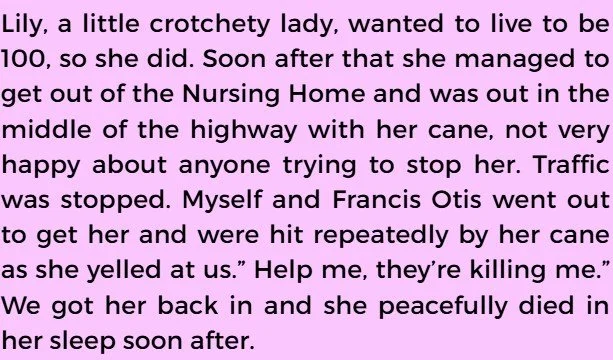
I arrived in 1974. I was working at Harborview and I sent a letter to the Nursing Supervisor Margaret Mitchell, with a list of my education and experience, where I had worked, and received a letter back asking me to please come. I started working days and evenings with Margaret Pheasant, Maggie Gilreath, Eleanor Gausman, Midge Williams, Dorothy Catlin, Wanda Moffit, Linda Sylvester Madge Brandt, Dicky Burberry, Myrt Forrest and Pat Smith. Nan Parr Sherman, Janice Higby, Bertha Clark worked nights. I may have missed some too.
I went from working on a busy surgical ward at Harborview to rural hospital nursing, which was often way too busy and often not at all busy. Nurses at that time worked the ER, sometimes surgery, watched cardiac monitors, delivered babies when the doctors could not get there, cared for babies and children. We worked either the 1st floor, which was the medical floor and home to Arthur Lund and other permanent residents, or worked the second, which was surgical and had a nursery for babies, 2 OR’s and a big supply room with a sterilizer in it, manned by Carol Patterson who was also scrub tech. Sometimes we were so busy that we had beds in the hall on the second floor. Pharmacy was in a closet. This was still back in the days when we calculated doses, mixed IV’s with meds, calculated the drip, and we did not have the nice technical equipment we have now. The night shift covered the hospital and the nursing home, which had 70 beds at the time. I received a better orientation at NVH than I did in the Army or at Harborview.
Notable Staff:
Hospital Staff:
Margaret Mitchell was the DNS who hired me; she lived in the hospital basement and rode her bike around town.
Carol Patterson May was my first patient at NVH.
Rolly Morrison was the first Vietnam veteran I could talk to about being a veteran myself.
Barbera Perry, DNS, had hospital nurses orient to the nursing home, which is how I eventually moved there.
Bertha Clark, Marcy Frank, and John Frank also served during this time.
Nursing Home Staff:
Helen McDaniel was the hospital DNS in the late 70s.
Jenny Luhn was the administrator and a great marketer for the facility.
Dixie Brown and Kathy Tomlinson started shortly after I did; Dixie eventually became DNS.
Judy Gladden started as an aide and eventually administered the nursing home years later.
Cindy Lawson, LPN.
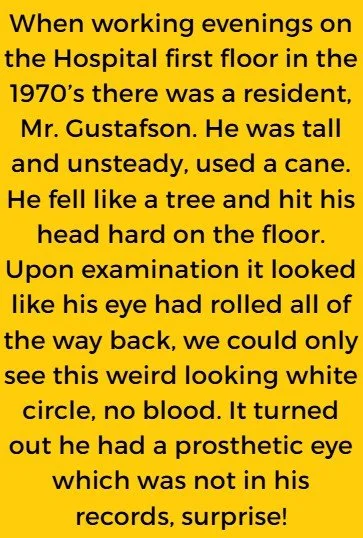
Nurse Aides (NACs) included Florence Stalder, Carol Vincent, Ruth, Helen Krustangel, Frances Otis, and Kate Vance. Kate was over 80 when she retired and continued to "check on" the staff even after she became a resident.
Carmen Beeman and Wanda Kitterman started as NACs and became LPNs.
Evolution of the Nursing Home
By the 1980’s it became apparent that we would have to build another Nursing Home building. Two floors with inadequate fire escapes, more wood than cement, safety issues such as a basement with unsafe access with a resident figuring out how to open a door and falling down the stairs, inadequate dining and more. We had a new building to move into after the convent was torn down. The new building with laundry attached was built and moved into in 1986. It was a big community effort. The old building ended up being used for offices, places to sleep, meetings, classes, Board meeting room. I developed our NAC class there in 1995 and taught there. Volunteers helped us move residents over in stages. Nurses and Nurse aides were in heaven with space, enough bathrooms, nurse stations, kitchen and dining room, the front room.
Surveys have been happening at Nursing Homes for decades. Surveyors are nurse mostly who have taken training to be surveyors. Once per year we would wait for our survey, would get ready for it by making sure everything was done and up to date with book work and on the floor. In the 80’s and early 90’s after the Gray Panthers helped regulate Nursing Home care, we would be surveyed by some pretty severe surveyors who would actually yell at us and pound on the counters. It seemed like they wanted us to fail. We actually figured out how to survey them. Things did get better, surveyors became more helpful and communicated better. Surveys are still big anxiety generators.
The New Team:
Peggy Operud became DNS after Jennie Luhn.
Bernice Hailey who started as an NAC, then RN, then RCC and eventually became DNS. Taught Nurse Aide program.
Karen Mosley LPN on day shift
Ellen Glen, started out in the Hospital on night shift then RN on days, then RCC
Dixie Brown, RN day and evenings, became DNS. Taught Nurse Aide program.
Kathy Tomlinson, RN evenings
Becky McDaniel who came over from the Hospital as DNS and was there for 13 years. A very long time to be a DNS of a Nursing Home. Helen McDaniel, her mother, retired and volunteered on the floor for some time.
Donna Prior, RN Day shift charge
Joy Keeling who started out as an NAC in the old Nursing Home, became an RCC
Susan Swartzel, who started out as an NAC in the old Nursing Home. then RN days and evenings.
Maggie Gilreath LPN, day shift
Kris Kauffeld RN evenings
Abby Thorndike LPN night shift
Carmen Beeman LPN night shift
Wanda Kitterman LPN night shift
Phyllis Greenwalt, who started as an NAC, became RN day shift
Marcia Naillon started as an NAC, became RN, DNS at NVH
Sandy Vaughn RN and became RCC
Karen Schimpf started as RN at hospital, worked evenings at Nursing home, then nights, then charge on day shift, then first RCC. Developed the Nurse Aide program
Challenges, Changing Times, and MEMORIES
Early in my career, we were taught that our charting should be as concise and short as possible, as well as to present an accurate report or notes. Shift logs were started in the 1980’s so we could have a written record with shift changes. They started as poetry and were not official, but light and funny. They soon became official records and we stopped the poetry. With the advent of more insurance related issues, and more regulations after the Gray Panthers lobbied in the late 80’s, charting became more and more detailed related to liability, charts became fatter. Then computers came on board and the same happened, with the need for more staff. Simple no longer existed. DRG’s started in the late 1980’s, forerunners to what is happening now with insurance and regulations. We had a little lady, 93 years old, who needed a hernia repair, which she received at the Hospital, but DRG’s would only allow her to stay in the Hospital for 3 hours, so back she came to us, no warning and no staff for the little lady with dementia, an IV, a dressing and coming out of anesthesia. We learned real fast to plan for this, but having enough staff was a challenge.
One thing about nursing in small towns is that you know and work with people you end up taking care of and when you end up in the Hospital for some reason, you are taken care of by people you know. This remains true today. One time I ended up in the Hospital with a tubal pregnancy and was met by Mark Patterson at the ER door, Dr Holmes and Dr Henze performed surgery and I was cared for by Rolly Morrison and Becky McDaniel.
I have taken care of some in the Nursing Home when they passed, always an honor and a privilege. They included Kate Vance, Francis Otis, Bertha Clark, Ruth Lewis, Karen Mosley and Stuart and Edith Holmes. We all cried when they brought Dr Holmes over from the Hospital.