Growing Healthcare Close to Home

News

Keeping in touch with our local community!

NVH Newsletter July 2024

Rural Excellence Award:

For the second year in a row North Valley Hospital is proud to announce its selection as one of 13 hospitals honored by the Washington State Hospital Association (WSHA) for the Critical Access Hospital Achievement of Quality Excellence program. This prestigious recognition underscores our unwavering commitment to delivering exceptional healthcare services and improving patient outcomes.

The WSHA recognized these hospitals for their exemplary performance in key areas of healthcare quality improvement, including sepsis management, workplace violence prevention, diagnostic excellence, and addressing health disparities. The honored hospitals were selected based on their comprehensive reporting and adherence to quality measures that ensure the highest standards of care.

North Valley Hospital remains dedicated to advancing healthcare quality and will continue to implement innovative strategies to meet the evolving needs of our patients. We are grateful for the support of our community and the hard work of our staff, which made this achievement possible.


Noreen Olma & Kim Jacobs:

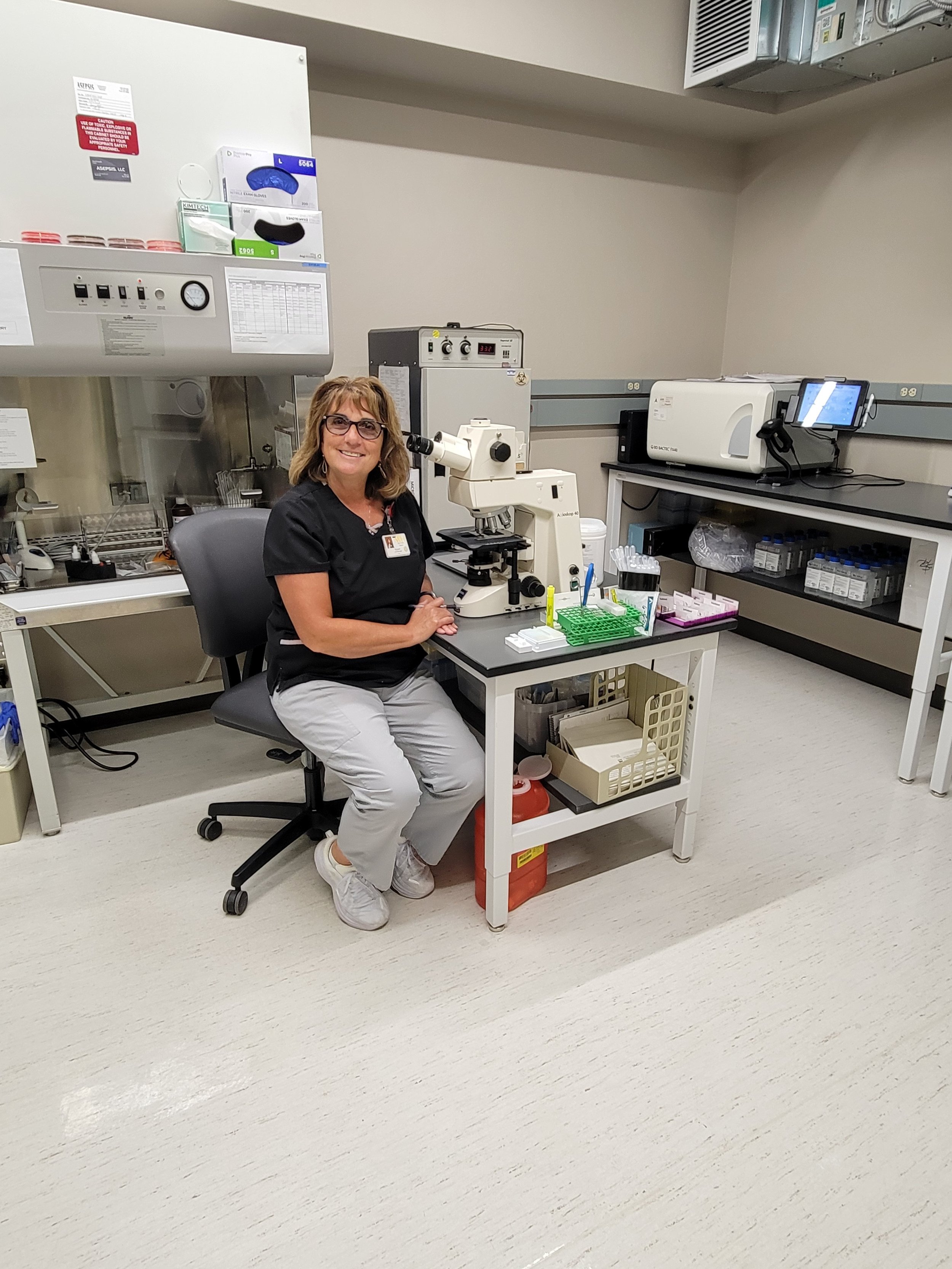
Retirements are bittersweet! Noreen Olma, Lab Manager and Kim Jacobs, Safety Officer both retired this summer. Both Noreen and Kim worked at NVH over 30 years.

Their dedication and passion have been truly inspiring, and it's hard to imagine my time here without their presence.

Noreen and Kim have been pillars of strength and support, making a significant impact on all of us. Noreen's unwavering commitment and Kim's boundless energy have shaped the very essence of our work environment. Their contributions have been invaluable.

As Noreen prepares for her well-deserved retirement, celebrated her last week with us, and Kim, who embarks on her retirement journey next month, it is hard to picture NVH without their guiding presence. Best of luck to both of you and enjoy retirement!


Construction Update:

As progress continues on the our HVAC construction, the team has moved onto the first floor in the St. Martin’s Building and Hospital. For patients and visitors this phase of work will be the most disruptive as access to MRI and x-ray require alternative routes. Patients in the ED and hospital floor may experience construction noise and increased traffic, but the crews are striving to be low impact.
Hot Conditions and Dehydration:

Staying Safe and Hydrated

As temperatures rise during the summer months or in hot climates, the risk of dehydration increases significantly. Dehydration occurs when the body loses more fluids than it takes in, disrupting the balance of salts and sugars in the body, which can affect the way it functions.

Understanding Dehydration

Dehydration can range from mild to severe, and its symptoms can vary accordingly. Mild dehydration might cause dry mouth, thirst, and decreased urine output. As dehydration progresses, symptoms can include:

  • Dizziness or light-headedness

  • Dry skin that doesn’t bounce back when you pinch it

  • Rapid heartbeat and breathing

  • Lack of energy or confusion

  • Fainting

In severe cases, dehydration can lead to heat exhaustion or heatstroke, both of which require immediate medical attention.

Causes of Dehydration in Hot Conditions

When exposed to hot conditions, the body tries to cool itself through sweating. Sweating results in a significant loss of water and electrolytes, such as sodium and potassium, which are essential for normal bodily functions. Factors that can exacerbate dehydration in hot weather include:

  • Physical Activity: Engaging in strenuous activities increases sweat production, leading to higher fluid loss.

  • Inadequate Fluid Intake: Not drinking enough water to replenish lost fluids can quickly lead to dehydration.

  • Clothing: Wearing heavy or non-breathable clothing can trap heat and increase sweating.

  • Alcohol and Caffeine: These substances can increase fluid loss through urination.

Preventing Dehydration

To prevent dehydration in hot conditions, it's essential to maintain an adequate intake of fluids. Here are some tips to stay hydrated:

  1. Drink Plenty of Water: Aim to drink at lot of water and drink even more if you are active or spending extended periods in the heat.

  2. Consume Electrolytes: Include drinks that contain electrolytes, especially during and after exercise. Sports drinks, coconut water, and oral rehydration solutions are good options.

  3. Eat Hydrating Foods: Incorporate fruits and vegetables with high water content into your diet, such as watermelon, cucumbers, oranges, and strawberries.

  4. Avoid Dehydrating Beverages: Limit the intake of alcohol and caffeinated drinks, as they can contribute to fluid loss.

  5. Take Breaks in the Shade: If you’re outdoors, take regular breaks in shaded or cool areas to help regulate your body temperature.

  6. Wear Appropriate Clothing: Choose light, breathable fabrics that allow your body to cool more effectively.

Recognizing and Treating Dehydration

Early recognition of dehydration symptoms can prevent more severe health issues. If you or someone else shows signs of moderate to severe dehydration, it is crucial to:

  • Stop Physical Activity: Rest in a cool, shaded place.

  • Rehydrate: Drink water or an oral rehydration solution slowly. Avoid chugging large amounts quickly, as it can cause stomach upset.

  • Seek Medical Attention: If symptoms worsen or do not improve, seek medical help immediately.

Sports Physicals:

Cover your kids' ears, but the end of summer is fast approaching. With the fall sports seasons just around the corner, it is time to start thinking about Sports Physicals. The Tonasket Family Medical Clinic has walk-in availability starting this week on Thursdays and Fridays until August 30th. Call 486-3191 for more information.

John McReynoldsComment
NVH Newsletter June 2024

Welcome:

Thank you for reading the first edition of our newsletter. If you found us through the website, Facebook, or a printed copy, please consider subscribing at www.nvhospital.org to get updates right to your inbox.

We hope this platform will allow us to provide updates and insights into the work of NVH and topics impacting the health and well-being of our communities.

Construction Update:

Background:

A large portion of the hospital services are located in the 1952 St. Martin’s Building. It is the brick building directly north of the main entrance, and from the exterior, it is hard to tell it is a separate building. Much of the infrastructure is original from the 50’s and in desperate need for an update. Several years ago, we began the design and planning phases to upgrade the heating and cooling on all three floors. The work directly impacts the kitchen, surgery, outpatient clinics, lab, radiology, scheduling and billing.

This project will ensure we can keep using the space with less risk of the frequent heating and cooling issues we have had in the building. It is always a major investment in allowing us to meet upcoming energy savings requirements as part of the Clean Building Act.

In addition to upgrading the HVAC we are using the opportunity to add additional clinical space in the ER and hospital floor. These rooms were designed to be built-out later but have been used as storage. The additional rooms will allow us to see more patients and reduce crowding.

Wayne Verbeck, President of North Valley Community Health Association, aka the Hospital Foundation, presents Adam Tibbs, NVH BOC President, a check for $100k. The funds raised by the Hospital Foundation will be allocated to the completion of two critical projects within North Valley Hospital: Emergency Department Room 1 and Acute Care 110.

The total project cost is over $7M, with funding coming from several areas:

  • $100,000 donation from the Hospital Foundation

  • $1M grant from USDA

  • $775,000 grant from the Department of Commerce

  • $5M bond funded from Hospital operations and existing tax revenue

Status:

Last month, we hit an exciting milestone by placing the three HVAC units on the roof. It was a significant undertaking, and we wanted to thank our neighbors again for all of the disruption and inconvenience caused by the crane and road closure.

This week, work began on the first floor of the St. Martins building. This represents the final phase, and the project is scheduled to be wrapped up by the end of October.

Men’s Health Month

June is Men's Health Month, aiming to raise awareness of common health issues and encourage early detection and treatment among men. This observance highlights the importance of regular health check-ups, healthy lifestyle choices, and seeking help when needed. Men's Health Month provides an opportunity to promote overall well-being and educate men on the significance of prioritizing their health. With a focus on preventive care and healthy habits, this month serves as a reminder for men to take charge of their health and make informed decisions for a better quality of life.

The first step is making an appointment with your primary care provider.

Well-Being Survey:

Thriving Together North Central Washington is a CMS and state-funded organization focusing on improving health within Okanogan, Chelan, Grant, and Douglas counties. We have partnered with Thriving Together on several initiatives, including the drug disposal kiosk, the behavioral health program, and vocational training programs.

A few weeks ago, Thriving Together launched a Well-Being Survey (available here) which runs through the end of July. We are working with Thriving Together to promote participation in the survey, and we will also strive to support the subsequent efforts to improve the health of our communities. If you have not participate yet, please make your voice heard!

This data helps guide NVH and all of the organizations that play a role in health to prioritize our efforts and better serve our community.

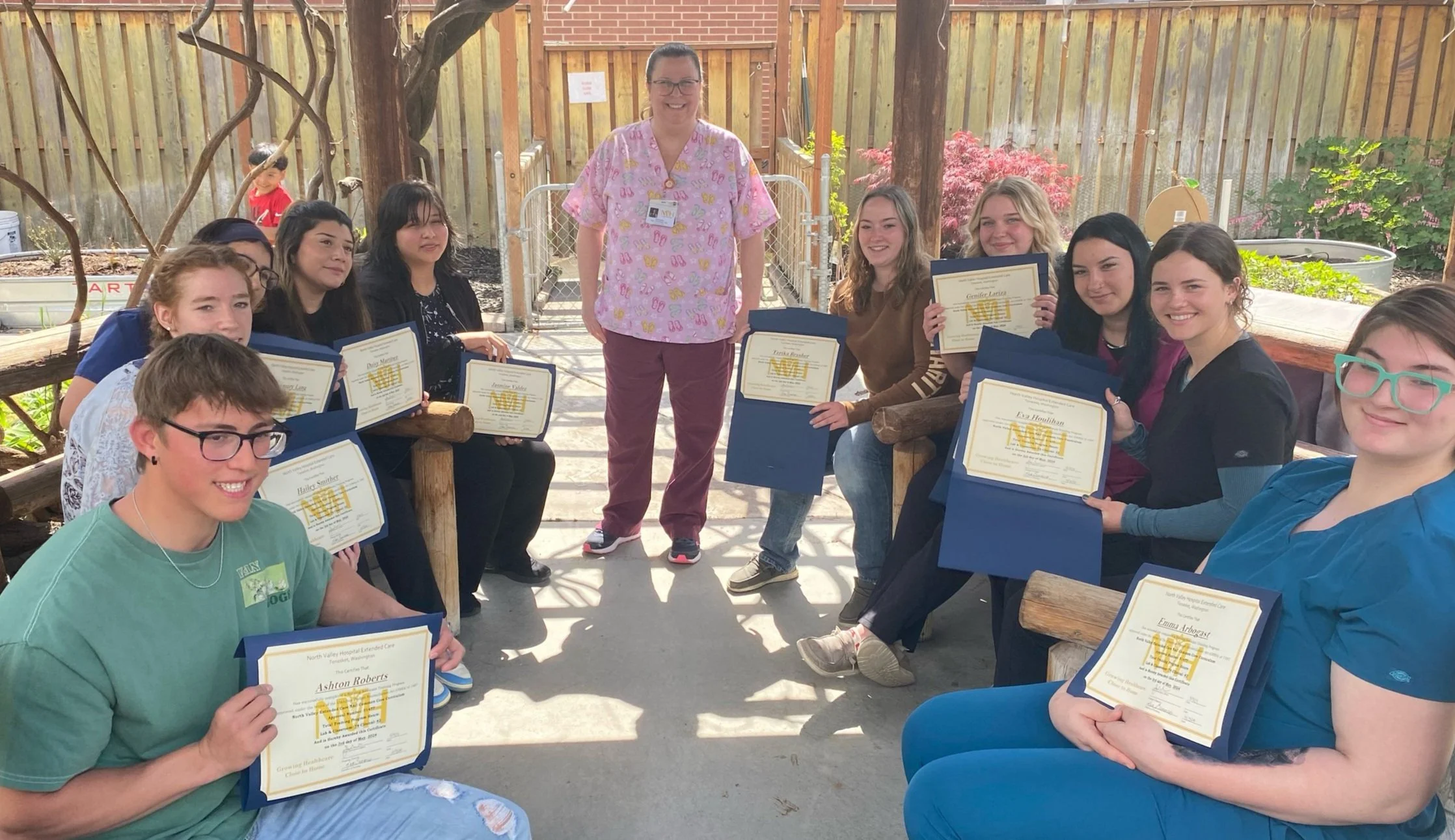
Congrats NAC Class!


Ten students completed the NAC course lead by Rochelle Allen. Pictured (L-R) Ashton Roberts, Hailey Smither, Rosemary Luna, Daisy Martinez, Jasmine Valdez, Rochelle Allen -NAC instructor, Terika Brasher, Genifer Lariza, Emma Lou Brasher, Eva Houlihan, Emma Arbogast

The most recent cohort of ten nursing assistant students graduated in May. This program is a great way for the participants to kickstart a career in healthcare. Our next class for CNA’s starts next week, but if you or someone you know is interested in a future class stay tuned.


John McReynoldsComment
OCPHD#4 New and Incumbent Commissioners Sworn In

Stephanie Steinman, BOC Pos. 4 At Large, and Jerry Bradley, BOC Pos. 2, were sworn in at the December 21, 2023 Board Meeting. This is Commissioner Steinman's first term and Commissioner Bradley's second. OCPHD#4 Commissioners serve 6 year terms.

COL LiaisonComment
5 Star Facility

CMS has updated their Nursing Home Ranks and has awarded North Valley Extended Care a 5-Star Rating.

Read more about the ratings CMS Ratings.

Great work EC Team!

John McReynolds
NVH Purchases New Mammo Equipment - Senographe Pristina ™ by GE

At the June 2022 regular meeting of the BOC, the OCPHD#4 Board of Commissioners approved the purchase of the new Senographe Pristina™ by GE mammography system. The new equipment was installed in August, just in time for October Breast Cancer Awareness Month. The integrated 3D system sets the bar for diagnositc confidence and performance. The ergonomic design helps to improve the overall patient and technologist experience. North Valley Hospital mammography technologists, Michelle Beattie and Brenna Beltrami, are highly trained professionals who aim to provide a comfortable experience for their customers. To schedule a screening mammogram, call 509-486-3124.

COL LiaisonComment
Ken Radford, RRT – Celebrates in the History of Respiratory Care

The following article appeared in the Spring edition of the NVH Newsletter. It discusses the history of Respiratory Care, reflections from Ken's career, and a highlight of his recent accomplishment.

A History of Respiratory Care – Nationally and Here at North Valley Hospital

By Phil Gleason:

For many of us, when we think of the health care provided by North Valley Hospital, we think of doctors and nurses. Rarely do we recall the ancillary staff that the doctors and nurses depend on for diagnosis, treatments, and to implement the plan of care. Respiratory Care is relatively new to the collection of ancillary departments, with its infancy traced back to “oxygen orderlies”, or the staff managing the potentially dangerous tanks of O2 in the early days. And O2 is a drug, and training individuals in its safe administration would have value. Thus begins the training for what is to become the field of respiratory care.

In Chicago, 1943, Dr. Edwin R. Levine began an “inhalation therapy” program using on the job trainees to assist with post-surgical patients. In 1946, a group of Dr. Levine’s students and others formed the “Inhalation Therapy Association” (ITA) and the first hospital-based department was formed.

The ITA evolved considerably into what is now the AARC (American Association of Respiratory Care), with the standards of care of a respiratory therapist much more defined. In 1960 the American Registry of Inhalation Therapists (ARIT) was formed, leading to a formal credential process for those in the field. This credentialing body evolved into the National Board for Respiratory Care (NBRC.) The NBRC developed two main levels of training and college education standards: certified respiratory technician (CRT) and registered respiratory therapist (RRT). CRTs are similar to LPNs in educational requirements, RRTs are similar to RNs.

Ken Radford, our Respiratory Therapist here at North Valley Hospital, was born in Seattle in 1956, the youngest of 5 boys.

Growing up in Central Seattle provided an ethnic diversity to his childhood; “A really cool upbringing.” He graduated from Franklin High School in 1975, which provided a rich interracial experience. Ken continued his education at Seattle Central Community College taking a variety of classes including welding, music, and accounting. Still looking for direction, an older brother, Ric, a Respiratory Therapy Department head, suggested Ken consider becoming an RT. Ken thought that was a good idea “until I figure out what I want to be when I grow up”. After 40 years in the field, jokingly Ken says, “I guess I never grew up.” In any case, Ken entered the respiratory therapy program at Seattle Central Community College.

Ken began his career working at Northgate Hospital in North Seattle in 1981. A year later (as was the requirement back then) he took and passed his certification exam in 1982. A few years later that facility was purchased by Northwest Hospital. Ken gained about 15 years of high-quality experience in those facilities, including much of his time spent in very active ICUs, where taking care of 2-4 ventilator patients per shift was common. While still working at Northwest Hospital, he and Corina started dating. They soon got married, lived in Mountlake Terrace and had two kids.

They later moved to Wenatchee and had another child. Because pay was better in Seattle, Ken continued to work at NW Hospital. Working three days a week, he would stay at his mom’s, and commute back to Wenatchee. Ken would joke: “I was 35 years old, married, three kids, two dogs, and a cat and owned my own home, but I still lived with my mom.”

Looking to eliminate the commute, Ken checked out a job in Chelan. While at the hospital, he heard of a similar job via the same company at the Tonasket Hospital. “Where’s Tonasket,” he remembers asking.

Ken and Corina decided to make the move to a more rural existence. He was hired as a “rent-a-tech” in the hospital. John Barnhart, was working at NVH at the time. The two of them split the week.
Ken later did homecare for a while, but when Barnhart wasn’t available, the Hospital would call Ken. He would have to tell them he wasn’t available. Later arrangements lead to Ken’s return to NVH. The company Ken worked for got bought out and they stopped providing therapists. Ken went to administration and said, “I’m out of a job and you’re out of a therapist, do you want to hire me,” which they did. When Barnhart left the area, Ken picked up the slack and began call 24/7. For a while RT call was done by the nurse anesthetist, but Ken is again on call 24/7.

“That must have been difficult during this pandemic?” I asked. I saw an expression cross Ken’s face that I’ve seen on other’s when asked about Covid’s impact on them. It is as if language cannot convey their emotion. It’s difficult for them to articulate the feeling when all the hospital beds are full, every gurney in the ER holds a patient, and another car pulls up with someone gasping for breath.

“The pandemic changed everything,” he said. For example, “how safe was it to give nebulized treatments?” Would the aerosol spray the virus throughout the room? Policies and procedures had to be written. Then there were patients who didn’t take the pandemic seriously, who didn’t believe it was real or who refused to take precautions. Ken saw it as a health care issue. When the Delta hit, it got worse. There were really sick individuals who needed intubation and ICU care. But every hospital in the state was full. “We had to up our game. We had to re-think everything and adapt.” Ken credits the hospital administration for setting up a task force to handle this volatile, fluctuating, and dangerous situation. Complementing the task force, Ken says he felt safer in a Covid room than he did walking into Walmart.

After talking with Ken, one is impressed with how much he really enjoys his work. During the years as a CRT in a rural setting, there were few online learning options, and with family and other commitments, completing the requirements to sit for a Registry exam was difficult. But, after four decades of working in the profession, Ken was able to go back to school online and take the classes required to be eligible to sit for the Registered Respiratory Therapist (RRT) exams. This credential required an additional 60 hours of coursework, passage of a four-hour "Therapist Multiple Choice Exam" followed by a Clinical Simulation Test covering chronic airways disease, trauma, cardiovascular, med/surg, pediatric, and neonatal clinical situations. Given his knowledge, experience, and years working in the profession, Ken wanted to obtain the right initials behind his name to better reflect it. He now holds those credentials and is working on a handbook of Respiratory Care for nurses.

A lot of small critical access hospitals don’t have an RT department. It goes without saying; we should acknowledge the importance and heroics of this profession during these difficult and challenging times.

John McReynoldsComment
New Training Platform

In March the Hospital and Extended Care received new training platforms that provide hands-on CPR practice with feedback to the student to improve our skills. Working in a small facility we (thankfully) do not have as many opportunities to provide this lifesaving care, but when we do we want to be as prepared as possible.

In addition to the student feedback about the quality of CPR being performed, a benefit is the ability to access the training more frequently and on-demand instead of waiting for an annual class.

John McReynoldsComment
Welcome Vicki Lewis

Vicki Lewis was elected to serve on the Board of Commissioners and formally takes office on January 1st. Vicki has worked in multiple healthcare roles in both military and civilian settings and maintains her RN license.

Welcome Vicki!

John McReynoldsComment
COVID PCR Analyzer

The NVH Lab has purchased a COVID PCR Analyzer which will significantly improve our ability to quickly and accurately identify COVID positive patients.

John McReynoldsComment
COVID-19 Vaccine

On December 15th NVH recieved the first batch of COVID-19 Vaccine in Okanogan County. Starting the next day we vaccinated any elgible healthcare worker, first reponder, or nursing home resident regardless of organization.

In the first two weeks we have vaccinated 500 people, and are awaiting approval from the Department of Health to move forward with the next phase.

John McReynoldsComment
Tonasket Family Medical Clinic Remodel Complete

The Tonasket Family Medical Clinic remodel of the Verbek building is complete. Dr. Jex and Dr. Dawson are seeing patients in the new space and are happy to be able to have more room.

We are accepting patients now and would love to schedule you for flu shots, check-ups, or to establish a new primary care physician.

John McReynolds
John McReynolds Appointed as CEO

Last night at their Regular Board Meeting the Commissioners accepted Scott Graham's resignation and appointed John McReynolds as CEO.

COVID has had a huge impact on the volumes and finances at Three Rivers and Scott felt he needed to be 100% focused on Three Rivers right now to help them recover from the COVID-inflicted financial damage.

John was hired as Chief Operating Officer in 2017,and used the opportunity at the Board meeting to thank Scott and the Board.

I am very proud of the collaborative work that we achieved and I was hopeful the hospitals could continue to move towards a higher degree of integration. Scott has been a great mentor for me, and I feel very fortunate to have had this opportunity to work with him. I am excited and humbled to be taking the role of Administrator, and I appreciate the faith in me the Board has demonstrated.

-John McReynolds

Most of the Board Meeting was focused on thanking Scott for his service, and committing to continuing to find ways to collaborate with our regional partner hospitals.

John McReynoldsComment
COVID-19

North Valley Hospital has stood up Incident Command to address and prepare for COVID-19. This process is our standard protocol for any emergency or situation that could impact our ability to care for patients or to prepare for an influx of patients.

Although the exact extent of the impact is unknown we are preparing and evaluating the impact on NVH. We will be discussing at our upcoming Town Hall Meetings on March 4th (CCC in Tonasket at 7pm) and March 5th (Senior Center Oroville 7pm).

John McReynoldsComment
Winter Newsletter


Thank you to the volunteers from the Long Range Focus Committee who’s many hours of printing, folding, and assembling made this newsletter an affordable way to connect with our entire District.

MVIMG_20200210_101624.jpg
 
 
John McReynoldsComment
$100,000 Grant Award
download (1).png

NVH was just awarded a $100,000 grant to support the Boiler Project. The Grant is from the Empire Health Foundation and Premera. The project kicks off in a few months.

Thanks to Teresa Webber, Mike Oberg, Kim Jacobs, and Rhonda Piner from the Grants Committee, and Dixie Brown, Montie Smith, and Salley Bull from the Foundation for their work on the project.

John McReynoldsComment